Von Dr. Astrid Rohles · LeadersForum Advisory & Coaching
By Dr. Astrid Rohles · LeadersForum Advisory & Coaching
Führung gilt als Kopfsache. Nach vielen Jahren auf der Yogamatte und in Konferenzräumen weiß ich: Der Kopf kommt oft als Letzter dazu.
Leadership is considered a matter of the mind. After many years on the yoga mat and in conference rooms, I know: the mind is often the last to arrive.
Ein Sitzungssaal in Brüssel, später Nachmittag. Seit dem Morgen bewerte ich mit Kolleginnen und Kollegen Innovationsprojekte. Millionenbudgets, enge Taktung, präzise Fragen. Irgendwann, mitten in einer Diskussion, bemerke ich: Mein Kiefer ist fest. Die Schultern stehen hoch. Ich atme flach, ganz oben im Brustkorb, wie jemand, der gleich wegrennen will. Dabei sitze ich nur an einem Tisch. Mein Körper hatte die Anspannung längst registriert. Mein Kopf erfuhr als Letzter davon.
Diese Reihenfolge ist kein Einzelfall. Sie ist die Regel. Als Ökonomin habe ich gelernt, Zahlen zu lesen. Als Yogalehrerin habe ich gelernt, Körper zu lesen. Und wenn ich heute Führungskräfte beobachte, in Gremien, auf Podien, in zähen Verhandlungen, sehe ich beides zugleich: kluge Argumente und Körper, die eine ganz andere Geschichte erzählen.
Der Körper führt mit
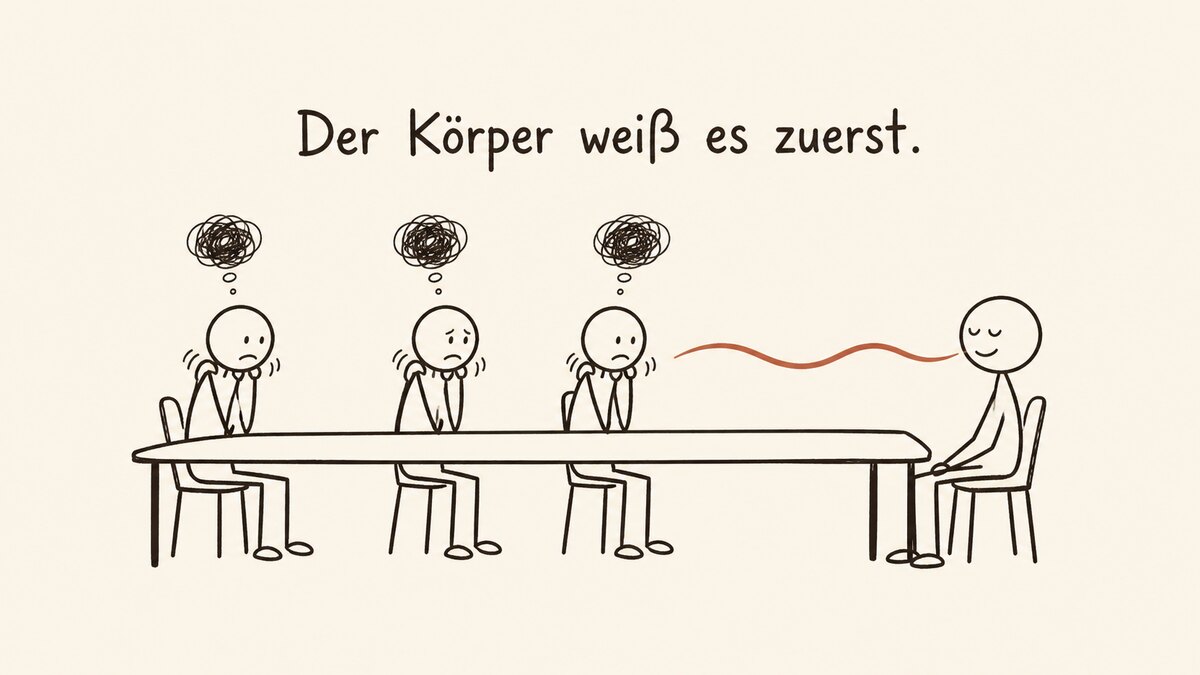
Unter Druck reagiert der Körper zuerst. Der Atem wird kürzer, die Stimme höher, der Blick enger. Das alles geschieht, bevor der Verstand auch nur einen klaren Gedanken gefasst hat. Und es bleibt nicht privat. Ein Raum liest Sie. Mitarbeitende spüren sehr genau, ob jemand gesammelt ist oder getrieben, ob eine Entscheidung aus Ruhe kommt oder aus Enge. Menschen folgen nicht nur dem, was Sie sagen. Sie folgen dem, wie Sie im Raum stehen. Wer den eigenen Körper überhört, überlässt also einen Teil seiner Führung dem Zufall.
Was die Matte lehrt
Yoga wird gern für Gymnastik gehalten. Für mich ist es ein Trainingsraum für genau drei Fähigkeiten, die in keiner Führungsausbildung vorkommen und in jeder gebraucht werden. Erstens: wahrnehmen, ohne sofort zu bewerten. Wo ist Spannung, wo ist Halt, was ist heute anders als gestern? Zweitens: den Atem als Hebel nutzen. Ein langer Ausatem beruhigt das Nervensystem messbar, in Minuten, nicht in Wochen. Drittens, und das ist die vielleicht wichtigste: im Unbequemen bleiben können. Eine anstrengende Haltung halten und dabei ruhig weiteratmen. Genau das braucht es in einer hitzigen Sitzung, wenn der Impuls schreit: verteidigen, angreifen, fliehen. Bleiben. Atmen. Dann antworten.
Präsenz ist körperlich
Wir sagen über manche Menschen, sie hätten Präsenz, als wäre das eine Gabe. Das meiste davon ist Handwerk. Beide Füße am Boden. Ein Atem, der bis in den Bauch reicht. Eine Stimme, die getragen wird statt gepresst. Wer so in einen Raum geht, wirkt nicht deshalb ruhig, weil er sich verstellt, sondern weil er es in diesem Moment tatsächlich ist. Präsenz ist kein Zustand des Kopfes, den der Körper illustriert. Es ist umgekehrt: Der Körper geht voran, und das Denken wird klarer, weil der Alarm leiser wird.
Drei kleine Übungen
Niemand muss dafür auf eine Matte. Drei Dinge, unauffällig genug für jeden Vorstandsflur. Vor wichtigen Terminen: dreimal lang ausatmen, länger aus als ein, niemand sieht es. Im Sitzen, mitten im Termin: ein kurzer Check von unten nach oben, Füße, Sitzfläche, Schultern, Kiefer, und alles, was hochgezogen ist, ein Stück sinken lassen. Nach einem Konflikt: erst ein paar Schritte gehen, dann die E-Mail schreiben. Klein, fast banal. Aber wer das drei Wochen übt, bemerkt Anspannung früher, reagiert seltener aus dem Affekt und ist schneller wieder bei sich.
Und noch etwas, mit systemischem Blick: Körper zeigen nicht nur den Zustand einer Person, sondern den eines Systems. Wenn in einem Team alle flach atmen, alle angespannt sitzen, alle nach der Sitzung erschöpft sind, dann ist das kein individuelles Problem mehr. Dann erzählt der Raum etwas über die Kultur. Auch das kann man hören lernen.
Führung beginnt nicht im Kopf. Sie beginnt einen Atemzug früher. Wer auf den Körper hört, führt sich selbst zuerst. Innere Führung hat einen Ort, und er liegt näher, als wir denken.
A meeting room in Brussels, late afternoon. Since morning I have been evaluating innovation projects with colleagues. Budgets in the millions, a tight schedule, precise questions. At some point, in the middle of a discussion, I notice: my jaw is clenched. My shoulders are up. I am breathing shallowly, high in the chest, like someone about to run. Yet I am only sitting at a table. My body had registered the tension long ago. My mind was the last to find out.
This order of events is not an exception. It is the rule. As an economist I learned to read numbers. As a yoga teacher I learned to read bodies. And when I watch leaders today, on boards, on stages, in difficult negotiations, I see both at once: intelligent arguments, and bodies telling an entirely different story.
The body leads too
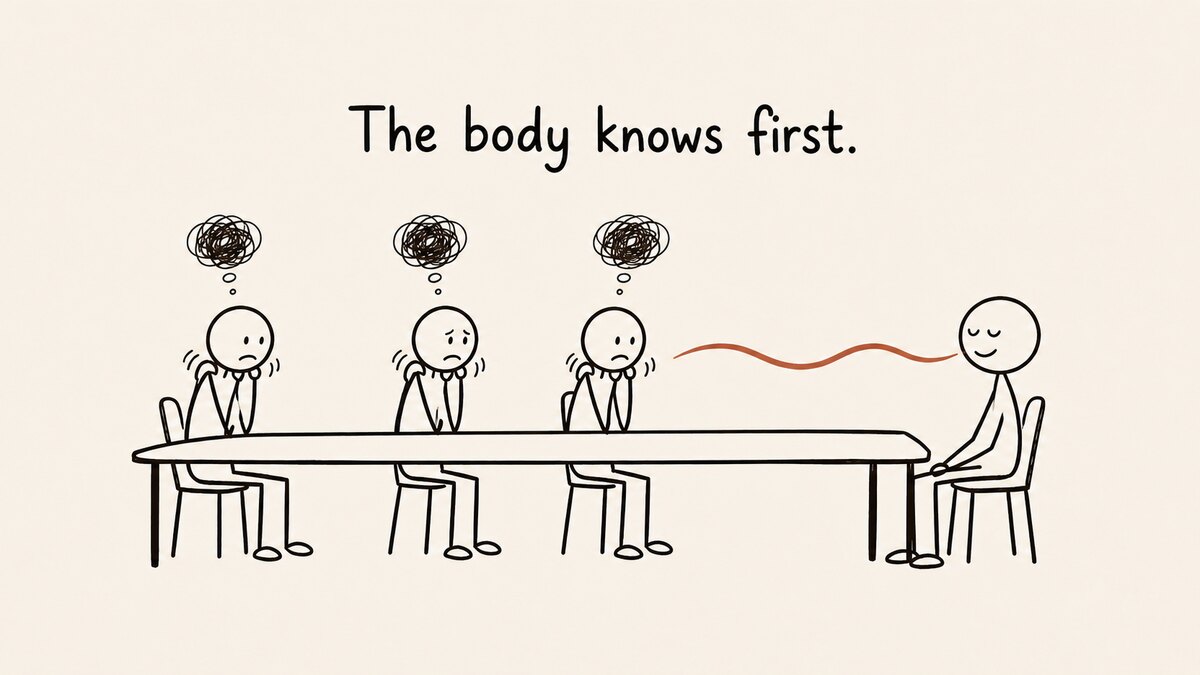
Under pressure, the body reacts first. The breath shortens, the voice rises, the field of vision narrows. All of this happens before the mind has formed a single clear thought. And it does not stay private. A room reads you. People sense very precisely whether someone is collected or driven, whether a decision comes from calm or from constriction. People do not only follow what you say. They follow how you stand in the room. Those who ignore their own body leave part of their leadership to chance.
What the mat teaches
Yoga is often mistaken for gymnastics. For me it is a training ground for exactly three abilities that appear in no leadership curriculum and are needed in every one. First: perceiving without immediately judging. Where is tension, where is support, what is different today? Second: using the breath as a lever. A long exhale calms the nervous system measurably, within minutes, not weeks. Third, and perhaps most important: being able to stay in discomfort. Holding a demanding posture while continuing to breathe calmly. That is precisely what a heated meeting requires, when the impulse screams: defend, attack, flee. Stay. Breathe. Then answer.
Presence is physical
We say of some people that they have presence, as if it were a gift. Most of it is craft. Both feet on the floor. A breath that reaches the belly. A voice that is carried rather than pressed. Whoever enters a room like this does not appear calm because they are pretending. They appear calm because, in that moment, they are. Presence is not a state of mind that the body illustrates. It is the other way round: the body goes first, and thinking becomes clearer because the alarm grows quieter.
Three small practices
No mat required. Three things, discreet enough for any executive floor. Before important meetings: three long exhales, longer out than in, nobody will notice. While seated, mid-meeting: a brief check from the ground up, feet, seat, shoulders, jaw, and let everything that has crept upward sink a little. After a conflict: walk a few steps first, then write the email. Small, almost banal. But practise this for three weeks and you will notice tension earlier, react less often on impulse, and return to yourself faster.
One more thing, seen systemically: bodies reveal not only the state of a person but the state of a system. When everyone in a team breathes shallowly, sits tensely, leaves meetings exhausted, it is no longer an individual problem. The room is telling you something about the culture. That, too, can be learned by listening.
Leadership does not begin in the head. It begins one breath earlier. Those who listen to the body lead themselves first. Inner leadership has a place, and it is closer than we think.